
firestarters movement: Skating and Arena Routes
Learn firestarters movement through skating, sliding, grinding and ground pounds, with practical route exercises and clear limits on unverified speed values.
Source-backed research summary. Reviewer observations are attributed; unverified details are marked pending confirmation.
On this page
- The movement toolkit
- Begin with a route you can recognise
- Add turns before adding complexity
- Connect traversal to the next target
- Practise weapon changes on familiar terrain
- What remains unverified
- Distinguish a route problem from a setting problem
- Keep comparisons within a known context
- Use the ground-pound input as a question, not a numerical promise
- Read upgrade language before changing a route
- Understand why old speed figures are historical
- Grinding has a reported scoring context
The movement toolkit
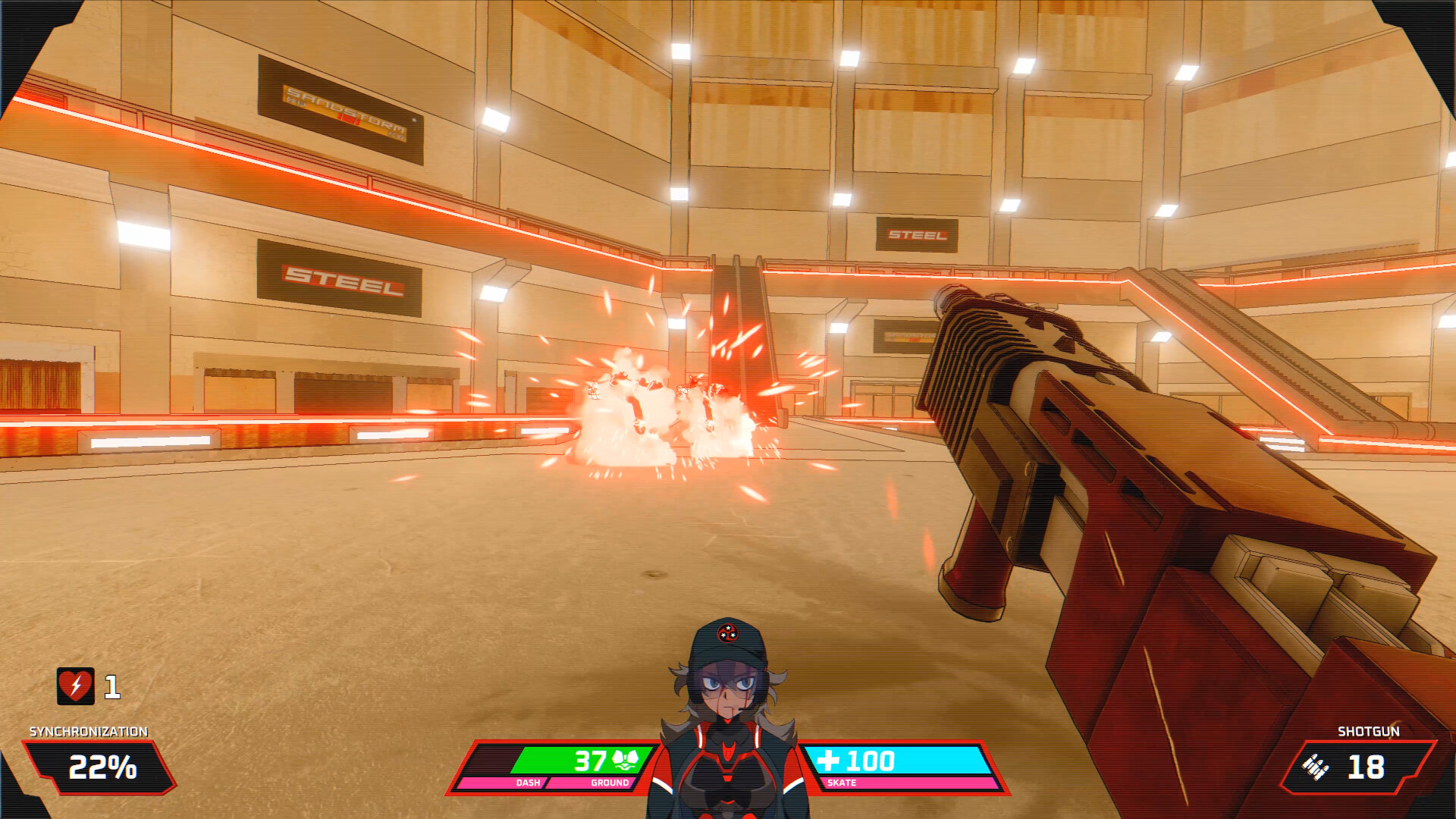
FIRESTARTERS movement combines rocket skating, sliding, grinding and ground pounding; learn a repeatable route before trying to make every action faster. These actions appear in the official description, but exact speed and acceleration values do not. This page offers practice suggestions without presenting them as measured optimal techniques.
Begin with a route you can recognise
Pick a short section where you can identify your starting position and a clear destination. Follow it without adding an unfamiliar action, then repeat it using the movement command you want to learn. Ask whether you arrived facing the right direction and could still identify the next target.
This approach gives each attempt a question you can answer. If you cannot tell what improved, shorten the route instead of adding more tricks. A successful practice segment need not be the fastest possible segment; it needs to make your next decision easier to understand.
Add turns before adding complexity
When straight travel feels predictable, test how your chosen input behaves around a corner. Watch where your view points and where your path actually carries you. Do not assume the difference means the controls are broken; check the tutorial and the input you are holding.
Avoid changing mouse sensitivity, key bindings and the route in the same comparison. If turning remains difficult, change one setting and repeat the same segment. No universal sensitivity number is supported by the sources used here.
Connect traversal to the next target
In Softpedia's launch preview, the reviewer reports that navigating to enemies quickly and learning their locations mattered under time pressure. That is evidence of the reviewer's experience, not a fixed route for every Storm. Use it as a reason to practise arriving ready to act rather than treating travel as a separate obstacle course.
Before attempting a more elaborate route, decide where the next attack is meant to happen. If a grind carries you away from that position, compare a simpler path. Style and speed are only useful practice goals when you can tell how they affect the encounter you are learning.
Practise weapon changes on familiar terrain
Once a route is comfortable, add a weapon switch at a predictable point. Notice whether you can keep the next target in view while performing the action. If you lose orientation, separate the input practice from the harder route until both are repeatable.
The weapon guide explains why different tools deserve separate tests. The controls guide covers checking action bindings in your current installation. Neither page assumes a copied demo key chart is a reliable description of your build.
What remains unverified
Pending confirmation (待确认): launch-version maximum speed, exact grind acceleration, invulnerability windows, ground-pound damage and movement cooldown values. Historical demo changes are not proof of those values today. A numeric claim needs a current developer source or a documented reproducible test.
After a Story clear, Arcade replay provides a way to revisit familiar Storms. Compare one route change at a time and use your own attempts as the baseline. This makes a useful personal practice log without pretending it establishes a universal record route.
Distinguish a route problem from a setting problem
A route can be difficult because its next landmark is unclear even when every input works correctly. Before changing settings, try to describe the turn or destination you keep missing. If you cannot identify it, a simpler route or a slower learning attempt may give you a clearer test than a new sensitivity value.
Conversely, if the requested action never occurs, check the relevant binding before repeating a more demanding combination. Record the action label and what happens on screen. That keeps an input question separate from an unsupported conclusion about momentum physics.
Keep comparisons within a known context
An old demonstration can show what a grind looks like without establishing its current speed. A video also does not automatically reveal the settings or version used by its author. Compare paths within the same installed build before attributing a difference to a hidden technique, and leave exact numerical conclusions for a documented test.
Use the ground-pound input as a question, not a numerical promise
Ground pounding is named in the official movement description, but naming an action does not establish a damage value or an invulnerability window. Learn the tutorial's requested use and identify where you arrive afterward. Until current evidence supplies more detail, avoid building a route around an assumed immunity or a guaranteed kill from that action.
If an attempt goes wrong after landing, record whether you lost your orientation, failed to reach the intended point or could not perform the next input. Each observation suggests a different practice adjustment. Treating all three as a single failed trick can hide the actual part you need to learn.
Read upgrade language before changing a route
The Wand hands-on preview describes movement-ability cooldown improvements among the options between waves. It does not supply their exact current values or a complete upgrade sequence. Read the purchase description before assuming that a route demonstrated with one loadout will behave identically with another.
When comparing attempts, note whether your available abilities or upgrades changed. A route becoming easier after a purchase is useful personal evidence, but it does not reveal the numerical amount of the improvement. Keep the observation and the explanation separate until you can test the specific effect.
Understand why old speed figures are historical
The February 20 demo notes record an increase in the nominal rail-grind speed from 3000 to 3500. Those are the developer's values for a demo change, not a current speedometer reading or a promised unit conversion for Early Access. They should not appear in a launch guide as verified present-day maximum speed.
The developer's later demo notice explicitly says that the demo no longer represented the quality of the release being launched. That warning applies to more than visual impressions: it is a reason to check old instructions against the installed build. Use historical notes to understand that movement changed during development, then practise today's behaviour rather than forcing it to match an old number.
Grinding has a reported scoring context
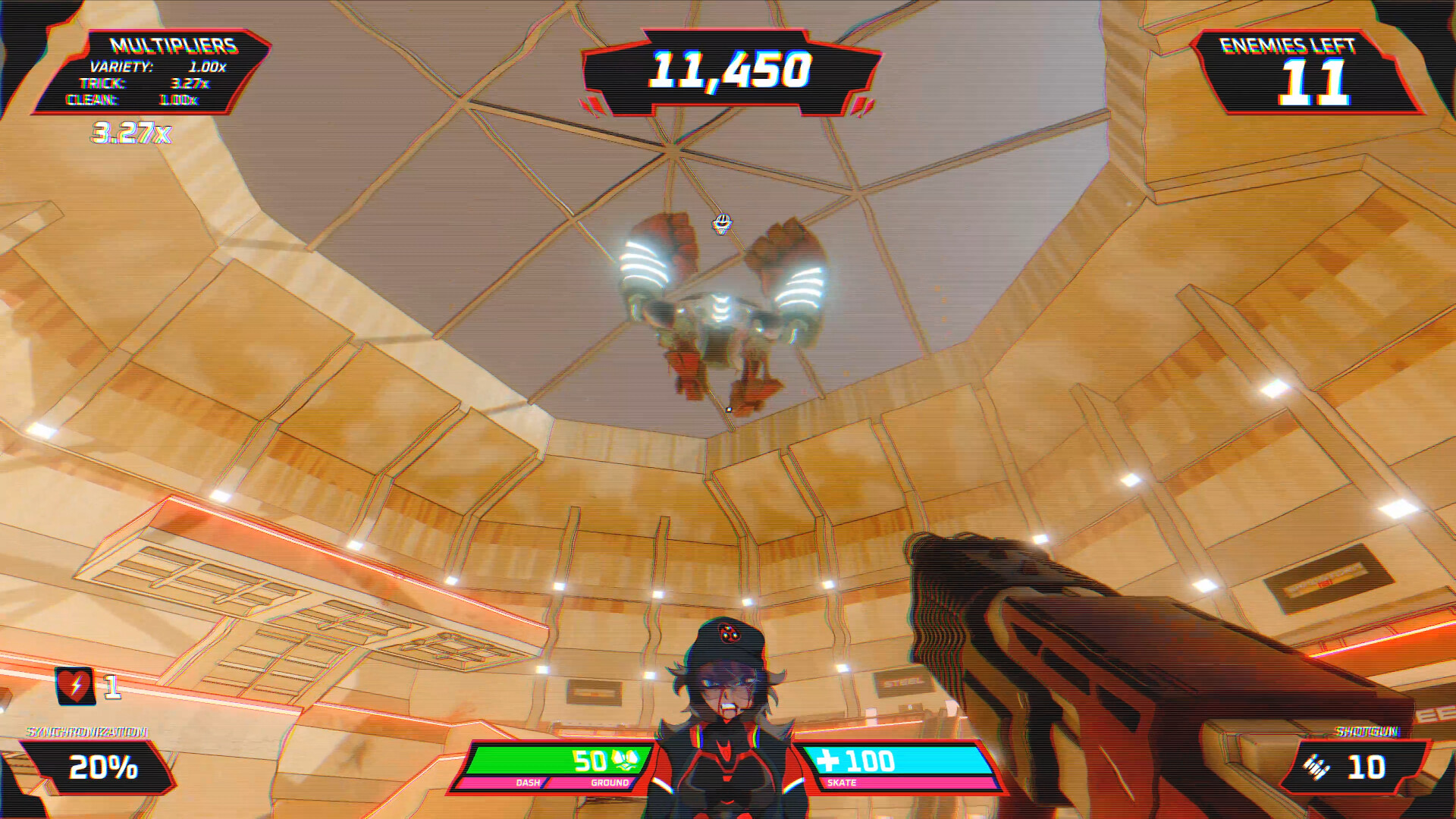
Phil Iwaniuk's hands-on preview reports that grinding slows the decline of the active score, while kills increase that score and a fall to zero ends the round. This connects movement to more than reaching the next platform. It is a description of his reviewed build, not a sourced equation or an exact comparison of rail routes.
The useful practice question is whether a particular grind keeps you connected to the encounter. A rail that looks impressive may still leave you far from a target you can attack reliably. Compare that route with a simpler alternative and look at the whole sequence rather than assuming that using a rail is automatically optimal.
Likewise, do not interpret slowing the decline as a guarantee that you can safely avoid combat forever. The source describes interaction between movement and attacks, not an unlimited preservation strategy. For scoring detail, continue with the score guide and keep any numerical claims separate from this attributed observation.
Related pages
firestarters arcade mode: Unlocks and Score Runs
Explore firestarters arcade mode, how Story Storms unlock score attacks, what the leaderboards track, and which scoring details still need confirmation.
firestarters guide: First Storm Survival Basics
A practical firestarters guide to movement, weapons, resources and Story progression, with sourced beginner advice and clear limits on unverified details.
firestarters controls: Bindings and Input Checks
Check firestarters controls through current action bindings, dialogue prompts and movement practice, separating reviewer inputs from unverified default keys.